


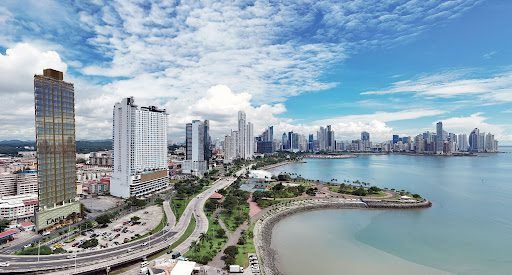
Buying an Apartment in Panama in 2026: Comparative Analysis by Area and Investment PotentialBuying an apartment in Panama in 2026 requires analyzing more than just location, view, or entry price. For a professional investor, the decision must stem from four key variables: economic growth, market liquidity, rental demand, and appreciation potential by area.
The macroeconomic context remains favorable. The World Bank estimates that Panama grew 4.4% in 2025 and projects 3.9% growth for 2026, with an expectation of 4.1% annually in 2027 and 2028. Growth continues to be supported by services, logistics, transportation, commerce, and financial activity.
Furthermore, the World Bank points out that private residential investment contributed positively to 2025 growth, while foreign direct investment remains close to 2.5% of GDP for 2025–2026.
At RI Group, we advise our clients that Panama should not be evaluated as a short-term speculative market, but rather as a dollarized, internationally connected urban hub with structural demand in well-selected areas. In this guide, we explain it in detail.
An area with a good return is not necessarily the cheapest one. It is one that combines current demand, limited or well-absorbed supply, solid infrastructure, and the ability to sustain prices across different market cycles.
Some of the most critical factors include:
Based on these criteria, some of the areas drawing the highest interest from investors in Panama City include Avenida Balboa, Bella Vista, Calle 50, San Francisco, and Obarrio. Although each responds to different demand profiles, they all share a key element: they concentrate economic activity, strong connectivity, and a consolidated real estate offering.
To decide where to buy an apartment in Panama, the analysis must zoom in to the neighborhood level. Citywide averages can mask significant differences in entry prices, rental demand, and buyer profiles.
Among the areas analyzed by our team:
Both sectors maintain competitive price levels compared to other premium zones and show sustained demand due to their proximity to the financial and commercial center.
In Bella Vista, the estimated gross yield for residential properties ranges between 5.5% and 7.0% annually, making it one of the most competitive ranges among the city's consolidated districts. The combination of a central location, access to the Cinta Costera, and a diverse range of residential projects favors both rental demand and market liquidity.
Avenida Balboa and Calle 50 operate under a different logic. Although they do not always appear as separate districts in statistical databases because they traverse multiple administrative areas, both concentrate some of the highest real estate values in the city due to their oceanfront views, proximity to the financial district, and high-end building developments. On Avenida Balboa, various market analyses place land values between USD 3,000 and USD 4,000 per square meter, reflecting the scarcity of oceanfront land and the corridor's premium nature.
The takeaway for investors is clear: while Avenida Balboa and the Calle 50 corridor typically cater to wealth preservation strategies and executive demand, areas such as Bella Vista, San Francisco, and Obarrio offer an appealing balance between entry price, rental yield, and appreciation potential—especially in well-located projects with a differentiated offer.
An area may enjoy a strong reputation, but if future supply is too high or absorption is slow, expected returns can compress.
It is not just a matter of asking "Where are the best neighborhoods?", but rather:
In an environment with significant pre-sale inventory, buying smart means avoiding generic developments. The most resilient apartments are those with a clear competitive advantage: protected views, walkable locations, proximity to corporate hubs, efficient layout design, good HOA management, or a value proposition that is hard to replicate.
It is also important to distinguish between list price and probable closing price. The Lat Investor estimates that the average listing price for apartments in Panama City hovers around USD 2,557.00/m², but after negotiations, the actual average closed price may be closer to USD 2,350.00/m². While this is a private estimate, it reinforces a crucial point: published prices should not be taken as final market value.
For a professional buyer, this means opportunity lies not just in picking a recognized neighborhood. The real difference comes from selecting the right project within areas like Avenida Balboa, Bella Vista, Calle 50, San Francisco, or Obarrio—evaluating entry prices, expected demand, building profile, and future liquidity.
Avenida Balboa is one of Panama City's most iconic locations thanks to its waterfront setting and proximity to the financial district. For investors, its main advantage is scarcity: there are very few comparable oceanfront locations with urban access and proximity to services, giving properties here unique appreciation value.
Demand Profile:
Strengths & Risks: Its key strength lies in relative liquidity—a well-priced apartment on Avenida Balboa is easy for international buyers to understand. The primary risk is paying an excessive premium for a view without thoroughly vetting maintenance costs, building condition, and rental comps.
Bella Vista has established itself as one of the residential areas with the best balance of location, connectivity, and quality of life in Panama City. Its proximity to Avenida Balboa, the Cinta Costera, and the financial district allows quick access to major corporate hubs without sacrificing a residential neighborhood feel.
Strengths & Demand: Features a mix of classic developments and modern residential projects, offering varied price ranges. It attracts local residents, executives, expatriates, and international buyers. Its main strength is maintaining steady rental demand and good resale liquidity, particularly in well-located buildings with competitive amenities.
Obarrio retains strong value due to its location at the core of the financial and business district. As a fully developed neighborhood, land for new construction is limited compared to expanding submarkets.
Strengths & Risks: Ideal for investors targeting executive rentals due to high walkable demand from professionals working nearby. The primary risk lies in inventory heterogeneity: high-end modern towers sit next to older buildings that require careful inspection regarding maintenance, HOA management, and resale potential.
While recognized primarily as one of Panama's key financial avenues, Calle 50 has expanded its residential footprint over recent years. The density of corporate offices, banks, hotels, and multinational headquarters creates stable housing demand from professionals looking to eliminate long commutes.
Key Advantage: Residential demand relies less on tourism and more on the permanent economic activity of the financial district. When evaluating Calle 50 projects, focus on accessibility, neighborhood integration, nearby services, and appeal to corporate tenants.
A professional investor should model three scenarios before buying:
While Panama's overall economic outlook is positive, investors must factor in market risks. The World Bank notes fiscal challenges, climate risks that could affect strategic sectors like the Panama Canal, tighter global financial conditions, and the ongoing need to preserve market confidence.
Key investor mistakes to avoid:
The goal is not to find a single "best neighborhood," but to select the area that directly aligns with your investment strategy—whether that is cash flow yield, capital appreciation, liquidity, or wealth preservation.
© 2026 RI Group. All rights reserved.